Most humans have a negative reaction to seeing a large amount of blood; the psychological response can range from mild discomfort to triggering a fight-or-flight response. In these situations, people often go into panic mode and start cleaning immediately.
We 100% understand this reaction! It’s natural and rooted in evolution. But from a biohazard restoration standpoint, the best option you have to avoid even bigger problems in the future is a bit counterintuitive: do nothing.
Let’s go over two common mistakes to avoid.
Mistake #1: Covering It Up
If there’s a large amount of blood on the floor, covering it up with towels or waterproof plastic will spread the mess whether you walk on it or not. The material keeps the blood wet longer and holds it against the flooring, helping the fluid spread and saturate. If you do walk on it, each step you take expands the affected area.
After the first responders finish their work, completely avoid the area and contact a professional biohazard cleanup company. Most companies provide free assessments and consultations.
Mistake #2: Drowning It in Bleach Water
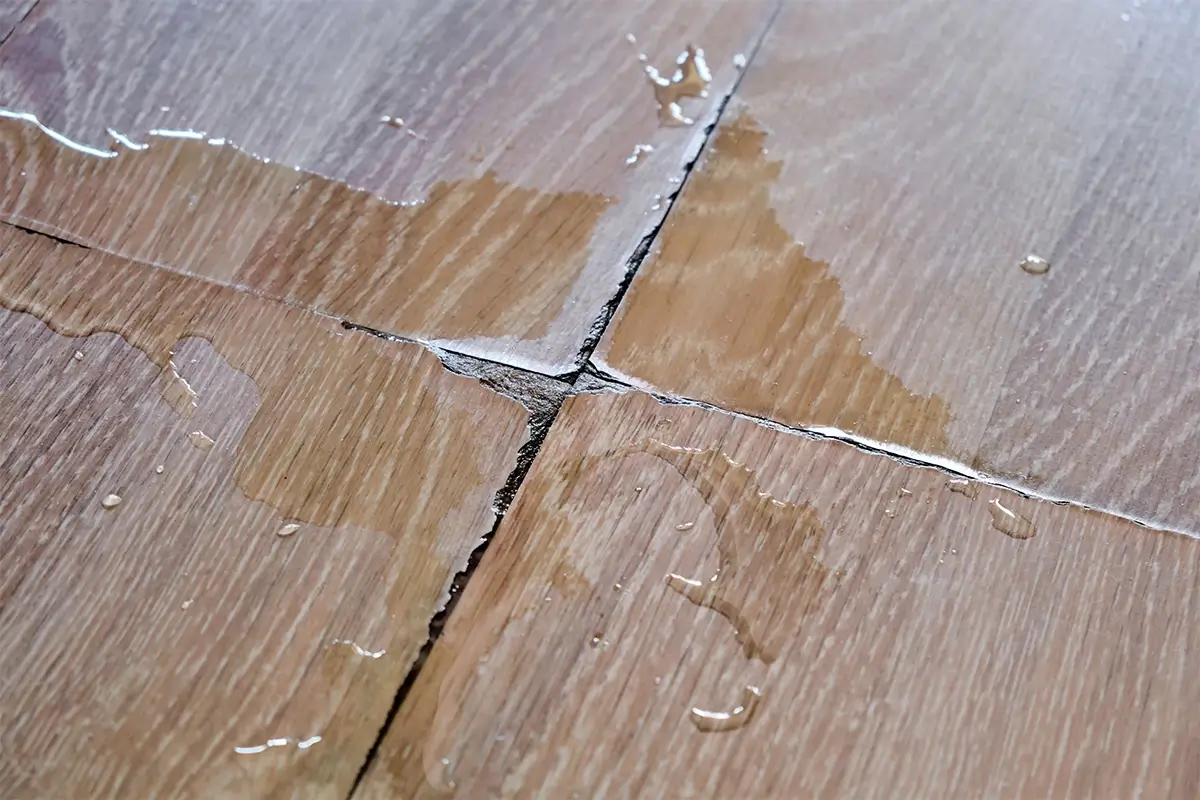
Using bleach water improperly for large blood spills will spread damage due to the differences in viscosity between blood and water.
Blood is a complex fluid that contains cells, proteins, and other molecules, which makes it 4-6 times denser than water—and it gets even thicker as it dries. Introducing a lower viscosity fluid like bleach water will push the blood between grooves in flooring and through unsealed grout, allowing it to pool beneath the tile or laminate. The more bleach water you add, the further it spreads, and repeated applications can cause the fluids to penetrate the subfloor. These leftover areas can lead to odor and structural damage which gets worse over time.
You can’t get true disinfection without “cleaning” first, which requires physically removing the blood and all saturated building materials before any disinfectant is used. Our technicians are certified to follow IICRC standards using professional grade, EPA-approved chemicals created for blood cleanup.
For large blood cleanups, you should always hire a professional biohazard cleaning company like BioteamAZ. Leave the affected area as-is; this helps us work faster and provide better service, as we can easily identify the area of impact. Additionally, if belongings/furniture are moved around, it can make it more difficult to ensure all bodily fluids have been removed.
If you choose to do the cleanup yourself, utilize appropriate PPE and EPA-approved products, follow all manufacturer instructions, safety data sheets, and local/federal laws.
FROM THE ANSI / IICRC S540
Physical removal and proper disposal of the human blood, body fluids, and OPIM contamination is the primary means of remediation. The contamination should be physically removed from the structure, systems, and contents.
When decontamination cannot be practically completed by cleaning alone, application of an appropriate antimicrobial (biocide) or mechanical means (e.g., sanding, scraping, media blasting) should be employed.
An appropriate government-registered antimicrobial (biocide) shall be applied according to label directions. Structure, systems, and contents that cannot be cleaned shall be removed, shipped, and disposed of according to all applicable governmental regulations.